
Why Choose Paintless Dent Repair for Ding Repairs
Getting a dent or ding on your car is one of those small frustrations that nags at you every time you walk up to your vehicle. Maybe it was a stray shopping cart, a hailstorm, or someone who swung their door open a little too enthusiastically. Whatever the cause, you’re now looking at damage that pulls your eye every single time. The good news? Paintless dent repair (PDR) is almost certainly the best way to fix it. Here’s why we recommend it over traditional body shop methods for the vast majority of minor dent repairs.
Dents Are More Than a Cosmetic Problem
It’s tempting to write off a small dent as “just cosmetic.” But that’s not the full picture. When a dent creases or chips the clear coat, even slightly, it creates an entry point for moisture. Over time, that moisture gets underneath the paint and starts corrosion. What began as a $150 fix can turn into a rust repair costing ten times that if you let it sit.
Dents also affect your car’s aerodynamics. That probably sounds like overkill for a door ding, but larger dents on the hood, roof, or quarter panels can genuinely change airflow patterns and nudge your fuel economy in the wrong direction.
Then there’s the resale factor. When a potential buyer sees dents and dings scattered across a vehicle, they don’t think “minor cosmetic issue.” They think “this car wasn’t taken care of.” That perception alone can knock hundreds or even thousands off your trade-in or private sale price.
The bottom line: getting dents fixed promptly isn’t vanity. It’s practical maintenance that protects your investment.
What Paintless Dent Repair Actually Is
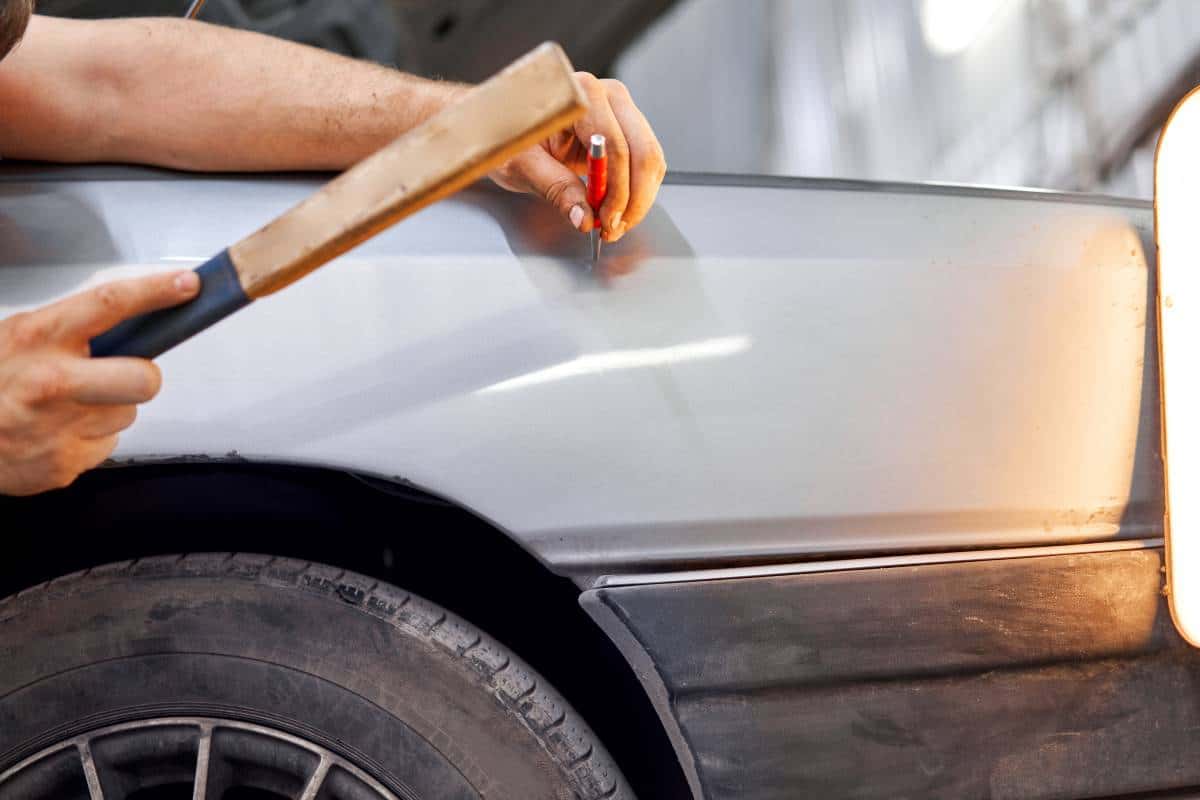
PDR is a technique where a trained technician uses specialized metal tools to gently work the dented metal back into its original shape from behind the panel. There’s no sanding. No body filler. No repainting. The factory finish stays completely intact.
Think of it this way: traditional body work treats a dent by covering it up. They sand the area, apply Bondo or another filler compound, prime it, repaint it, then clear coat it. The dent is hidden, but your car now has aftermarket paint on that panel. PDR doesn’t hide anything. It actually removes the dent by reshaping the metal to where it was before the damage happened.
This distinction matters more than most people realize. Factory paint from the manufacturer is applied under controlled conditions with precise thickness, adhesion, and curing processes that a body shop simply can’t replicate. Once you repaint a panel, it’s never quite the same. Color match issues, orange peel texture, overspray onto adjacent panels… these are all common problems with traditional repair that PDR avoids entirely.
PDR Benefits That Actually Matter
It Preserves Your Car’s Value
This is the big one. A vehicle with all its original factory paint is worth more than one that’s been repainted, period. CarFax and similar history reports will flag body work and repainting, which makes buyers nervous. PDR leaves no trace because there’s nothing to trace. The panel is simply returned to its original form.
When you’re ready to sell or trade in your vehicle, having documented PDR repairs actually works in your favor. It shows you cared enough to fix damage properly without compromising the original finish. That’s a selling point, not a red flag.
It’s Dramatically Faster
Traditional dent repair at a body shop typically takes three to five days. Sometimes longer if they’re backed up or if parts need to be ordered. Your car sits in a shop, you’re arranging rides or paying for a rental, and your schedule gets disrupted.
Most PDR jobs take between one and three hours. Not days. Hours. A single door ding can often be done in under an hour. Even moderate hail damage across multiple panels usually wraps up within a single day.
For anyone who depends on their vehicle for work (which is most of us in the Austin and Cedar Park area, where public transit options are limited), this turnaround difference is huge. You drop off your car in the morning and pick it up that afternoon.
It Costs Less
Without the expense of paint, primer, body filler, clear coat, and the labor hours required to apply all of them, PDR comes in at a fraction of traditional repair costs. A typical door ding that might run $300 to $500 at a body shop often costs $100 to $200 with PDR.
Insurance companies have caught on to this too. Most major carriers approve PDR for hail damage and minor dent claims because it’s less expensive for everyone involved. That often means lower out-of-pocket costs for you, and in many cases, your deductible covers the entire repair.
It’s Better for the Environment
Traditional body work generates chemical waste. Paint, solvents, primers, hardeners… all of that has to go somewhere. Body shops have to manage hazardous waste disposal as part of their operations.
PDR uses no chemicals at all. No paint. No solvents. No fillers. It’s a purely mechanical process. If eco-friendly dent repair matters to you (and it should), PDR is the clear winner. You get your car fixed without adding anything to a landfill or releasing volatile organic compounds into the air.
PDR vs Body Filler: Why the Difference Matters
Let’s talk specifically about body filler, because this is where a lot of people get surprised. When a traditional shop repairs a dent, they often use a product like Bondo to fill the depression rather than fully reshaping the metal. The filler gets sanded smooth, then painted over. It looks fine at first.
But body filler is not metal. It doesn’t flex the same way. It doesn’t expand and contract with temperature changes the same way. Over time, filler can crack, shrink, or separate from the panel underneath. You might start seeing a faint outline of the old repair, or the paint over the filler might chip differently than the surrounding factory paint.
PDR doesn’t have this problem because there’s nothing added to the panel. The metal itself is reshaped. It flexes and responds to temperature exactly the way it did before the dent. The repair is permanent in a way that filler-based fixes simply aren’t.
The Mobile PDR Service Advantage
Here’s something a lot of folks don’t know: many PDR technicians, including our team at Dingz Happen, offer mobile dent repair service. We come to you. Your home, your office, your parking lot. Wherever the car is.
This eliminates the biggest hassle of traditional repair: logistics. No dropping your car off, no arranging a ride back, no picking it up days later. We show up, fix the dents, and you go about your day. For busy professionals, parents juggling schedules, or anyone who just doesn’t want to deal with the body shop runaround, mobile PDR is a game changer.
Finding the Right PDR Technician
Not all PDR work is created equal. This is a skill-intensive craft that takes years of hands-on practice to master. The difference between a seasoned technician and someone who just took a weekend course is significant.
When you’re evaluating PDR providers, look for NAPDRT certification. The National Alliance of Paintless Dent Repair Technicians is the industry’s professional organization, and their certified technicians have demonstrated verified skill levels and commitment to professional standards. It’s the closest thing our industry has to a board certification, and it matters.
At Dingz Happen, our technicians bring years of real-world experience across thousands of repairs. We’ve handled everything from single door dings to full-vehicle hail damage recovery. That experience translates directly into better results, because reading each dent and knowing exactly how the metal will respond takes pattern recognition that only comes from doing the work.
What PDR Can (and Can’t) Fix
PDR works beautifully on the majority of minor dent repairs. Door dings, hail damage, minor creases, and small dents where the paint hasn’t been broken are all ideal candidates. If the paint is intact and the metal hasn’t been stretched beyond its elastic limit, PDR can almost certainly handle it.
There are situations where PDR isn’t the right call. If the paint is cracked or flaking at the dent, if the metal has a sharp crease that’s stretched the panel, or if the damage is on a body line where access is extremely limited, traditional repair might be necessary. A good PDR technician will be honest about this upfront. We’d rather tell you straight than attempt a repair that won’t hold up.
For the vast majority of everyday dents and dings though, PDR is not just an option. It’s the best option. Faster, cheaper, better for your car’s value, and better for the environment.
Insurance and PDR: What You Need to Know
Most insurance companies prefer PDR for covered dent and hail damage claims. It saves them money, and it produces results that are equal to or better than traditional repair. If you have comprehensive coverage, hail damage is typically covered, and your insurer will often recommend or approve PDR as the repair method.
We work with all major insurance carriers and can help you navigate the claims process. In many cases, we can handle the paperwork and communication with your adjuster directly, so you don’t have to play phone tag or fill out redundant forms.
Get Your Dents Fixed the Right Way
If your vehicle has dents or dings, don’t wait for them to become bigger problems. And don’t overpay at a traditional body shop for a repair that actually compromises your original finish.
Dingz Happen provides professional paintless dent repair across Austin and Cedar Park, TX. Our experienced, certified technicians deliver fast, affordable, and permanent results, and we can come to you with our mobile PDR service.
Ready to get those dents handled? Contact Dingz Happen for a free estimate. Most repairs are completed the same day, and your car leaves looking exactly the way it did before the damage happened. Because that’s the whole point.