
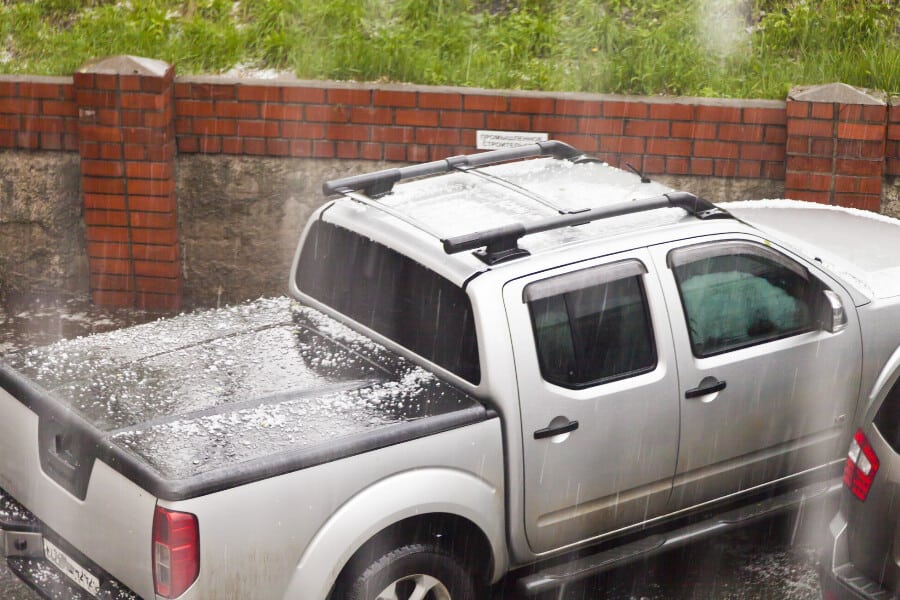
The Advantages of Paintless Dent Repair for Hail Damage
Why Central Texas Drivers Are Choosing PDR Over Body Shops
If you’ve lived in Central Texas for more than a year or two, you already know the drill. Storm clouds roll in, the sky turns that sickly green color, and before you can pull into a gas station overhang, your car sounds like it’s getting pelted by a bag of marbles. Welcome to hail season.
Between Austin, Round Rock, Cedar Park, and the surrounding Hill Country, we see several significant hailstorms each year. Texas consistently ranks as the most hail-prone state in the country, and Central Texas sits right in the crosshairs. The Texas Department of Insurance reports that hail causes over $1 billion in vehicle damage statewide in a bad year. And when a storm rolls through our area, the body shops fill up overnight with weeks-long wait lists.
That’s exactly why more and more drivers are turning to paintless dent repair (PDR) for hail damage. It’s faster, it’s cheaper, and when it’s done right, your car looks like the storm never happened. No new paint. No filler. No compromises.
At Dingz Happen, we’ve spent years perfecting PDR hail damage repair for drivers across the Austin metro. Here’s why it works so well and what you should know before your next claim.
What Hail Actually Does to Your Car
Not all hail damage is created equal, and understanding what you’re dealing with helps you make smarter repair decisions.
Small Hail (Pea to Marble Sized)
Hailstones under half an inch don’t usually cause visible damage from a distance, but get up close and you’ll see them. These tiny dents create a dimpled, “orange peel” texture across your hood, roof, and trunk lid. They won’t crack paint or break glass, but they absolutely tank your car’s resale value. A vehicle with 50 to 100 small hail dents can lose $2,000 to $4,000 in trade-in value overnight.
Medium Hail (Quarter to Golf Ball Sized)
This is where things get serious. Quarter-sized hailstones (about one inch) falling at 25 to 40 mph create clearly visible dents in body panels. Golf ball-sized hail can crack windshields, damage trim pieces, and leave dents deep enough that some body shops will push for full panel replacement. Most PDR technicians handle this size of damage routinely.
Large Hail (Baseball Sized and Up)
Hailstones this big are rare in Central Texas, but they do happen. At this size, you’re looking at potential structural damage, shattered glass, and dents so severe that the metal may be stretched beyond what PDR can address. Even then, a skilled PDR tech can often repair many of the dents on a heavily damaged vehicle, reducing the overall cost of the repair significantly.
The key takeaway: the vast majority of hail damage that Central Texas drivers deal with falls squarely in the sweet spot for paintless dent repair.
How PDR Hail Damage Repair Actually Works
If you’ve never seen PDR in action, it’s honestly pretty fascinating to watch. There’s no sanding, no body filler, no paint booth. Instead, the process relies on skilled hands and specialized tools.
The Process, Step by Step
Assessment. A trained PDR technician examines your vehicle under specialized lighting to map every single dent. Hail damage is tricky because some dents only show up at certain angles. A thorough inspection might reveal 80 or 100 dents that looked like 20 or 30 at first glance.
Access. The technician gains access to the backside of each damaged panel. Sometimes this means removing interior trim, tail lights, or other components. On a roof, they’ll work through existing openings or use specialized access points.
Repair. Using specially designed metal rods and body picks, the tech carefully pushes each dent out from behind the panel. They work the metal slowly, applying precise pressure to reshape it back to its original contour. Think of it like a skilled massage therapist working out a knot, except the patient is your hood and the knot is a hail dent.
Finishing. Once the dents are pushed out, the tech uses knockdown tools on the surface to fine-tune the repair and eliminate any high spots. The result is a panel that’s returned to its factory shape with the original paint completely intact.
The entire process preserves your car’s OEM finish. That matters for resale value, warranty coverage, and long-term durability. A car repaired with PDR has no history of bodywork on its record. As far as anyone can tell, the storm never happened.
PDR vs. Body Shop: The Real Cost Comparison
Let’s talk numbers, because this is where PDR really shines for hail damage.
Traditional Body Shop Repair
A typical hailstorm repair at a conventional body shop involves sanding down damaged panels, applying body filler, priming, painting, and clear coating. For moderate hail damage across a full vehicle, you’re looking at:
- Cost: $4,000 to $8,000+ depending on severity
- Time: 2 to 4 weeks (longer after major storms when every shop is backed up)
- Paint match risk: Even the best color-match technology isn’t perfect. Repainted panels can look slightly different in certain light
- Value impact: Your vehicle now has a body shop repair on its history, which can reduce resale value by 10 to 15 percent
PDR Hail Damage Repair
The same damage repaired with PDR looks like a completely different proposition:
- Cost: $1,500 to $4,000 for most vehicles (50 to 60 percent less than body shop work)
- Time: 1 to 3 days for most repairs. Some lighter damage can be completed in a single day
- Paint integrity: Your original factory paint stays exactly as it was
- Value impact: No bodywork history. Your car’s value is fully preserved
For the math-inclined, that’s a potential savings of $2,500 to $5,000 or more, plus your car back days or weeks sooner. There’s a reason insurance companies actually prefer PDR for hail claims.
Insurance and PDR: What You Need to Know
Speaking of insurance, let’s clear up some common confusion about hail damage claims and paintless dent repair.
PDR Is Insurance Approved
Most major insurance carriers not only accept PDR for hail claims, they actively prefer it. Why? Because it costs them less money and produces equal or better results. State Farm, USAA, Allstate, Progressive, Geico, and virtually every other major carrier will cover PDR hail damage repair under your comprehensive coverage.
How the Claims Process Works
Here’s the typical workflow when hail hits your car in Central Texas:
- Document the damage. Take photos of every panel in good lighting before doing anything else.
- File a claim. Call your insurance company or file through their app. Hail damage falls under comprehensive coverage, not collision.
- Get an estimate. Your insurer will send an adjuster or ask you to get estimates. This is where you want a PDR specialist involved, not just a body shop.
- Choose your repair shop. You have the legal right to choose where your car gets repaired. The insurance company can recommend shops, but they can’t force you to use one.
- Supplemental claims. If the initial estimate misses damage (and it often does with hail), your PDR shop can file a supplement with the insurance company for additional repairs found during the process.
The Deductible Question
Most comprehensive deductibles run $500 to $1,000. With PDR’s lower overall cost, your out-of-pocket expense after the deductible is often zero. In many cases, the insurance payout covers the full PDR repair with nothing extra owed.
One important note: don’t wait too long to file. Most policies require you to report hail damage within a reasonable timeframe. Waiting months can complicate your claim.
Why Hail Damage Shouldn’t Wait
We get it. After a hailstorm, life goes on. The car still runs fine. Those dents are just cosmetic, right? You’ll get around to it eventually.
Here’s why that thinking can cost you.
Corrosion risk. Hail impacts can create microscopic cracks in your clear coat that aren’t visible to the naked eye. Over time, moisture seeps through those cracks, gets under the paint, and starts the rust process. What was a simple dent becomes a corrosion problem that PDR can’t fix.
Compounding damage. Texas weather doesn’t take breaks. If another hailstorm hits before you’ve repaired the first round of damage, those existing dents become stress points where the metal is more likely to crack or deform further.
Depreciation. Every day you drive with visible hail damage, your car is worth less than it should be. If you need to sell or trade in unexpectedly, you’re leaving money on the table.
Insurance complications. If you file a claim for a new storm but still have unrepaired damage from a previous one, separating the old damage from the new becomes a headache that can delay or reduce your payout.
The Environmental Advantage
This doesn’t get talked about enough. Traditional body shop repairs involve chemical paint strippers, primer, base coat, clear coat, and hardeners. All of those products release volatile organic compounds (VOCs) into the air. The sanding process creates dust contaminated with paint particles and filler material.
PDR uses none of that. Zero chemicals. Zero paint. Zero waste beyond the occasional replaced clip or trim piece. It’s just metal being reshaped by hand tools. For drivers who care about their environmental footprint, that’s a genuine advantage worth considering.
Mobile Hail Damage Repair: Can PDR Come to You?
One of the nice perks of PDR is that it doesn’t require a full body shop setup. Many repairs can be completed with portable equipment, which means your technician might be able to come to your home or workplace.
For lighter hail damage involving a handful of panels, mobile PDR hail damage repair is often practical. Your car stays in your driveway while the work gets done.
That said, more extensive hail damage with dozens or hundreds of dents across every panel usually requires a shop environment. The technician needs proper lighting, more room to work, and access to the full range of tools. For storm-level hail damage, plan on dropping your car off, but the turnaround is still dramatically faster than a body shop.
Choosing the Right PDR Specialist for Hail Repair
After a major hailstorm, you’ll see “hail repair” signs pop up in parking lots and strip malls all over Central Texas. These are often storm chasers who follow severe weather from state to state, set up temporary operations, and disappear after a few weeks.
Here’s what to look for instead:
- Local reputation. A shop that’s been in the community and plans to stay. If something needs a touch-up six months later, they’re still around.
- Experience with hail specifically. General PDR skills and hail repair skills overlap, but hail work requires handling high volume across entire vehicles, not just a single door ding.
- Insurance experience. A good PDR shop knows how to work with adjusters, file supplements, and navigate the claims process so you don’t have to stress about it.
- Warranty. Reputable shops stand behind their work. Ask about their guarantee before committing.
Let Dingz Happen Restore Your Ride
Hail is part of life in Central Texas. But the damage doesn’t have to be permanent, and fixing it doesn’t have to drain your bank account or leave your car in a shop for weeks.
At Dingz Happen, we specialize in PDR hail damage repair for drivers across Austin, Cedar Park, Round Rock, and the surrounding communities. Our technicians have the tools, the training, and the experience to make your car look like the storm never touched it, all while preserving your factory finish and keeping costs well below traditional body shop prices.
We work directly with insurance companies every day, and we’ll help you navigate the claims process from start to finish. No runaround. No surprises.
Ready to get your car back to its best? Contact Dingz Happen today for a free hail damage assessment and estimate. We’ll show you exactly what we can do and get you back on the road fast.