
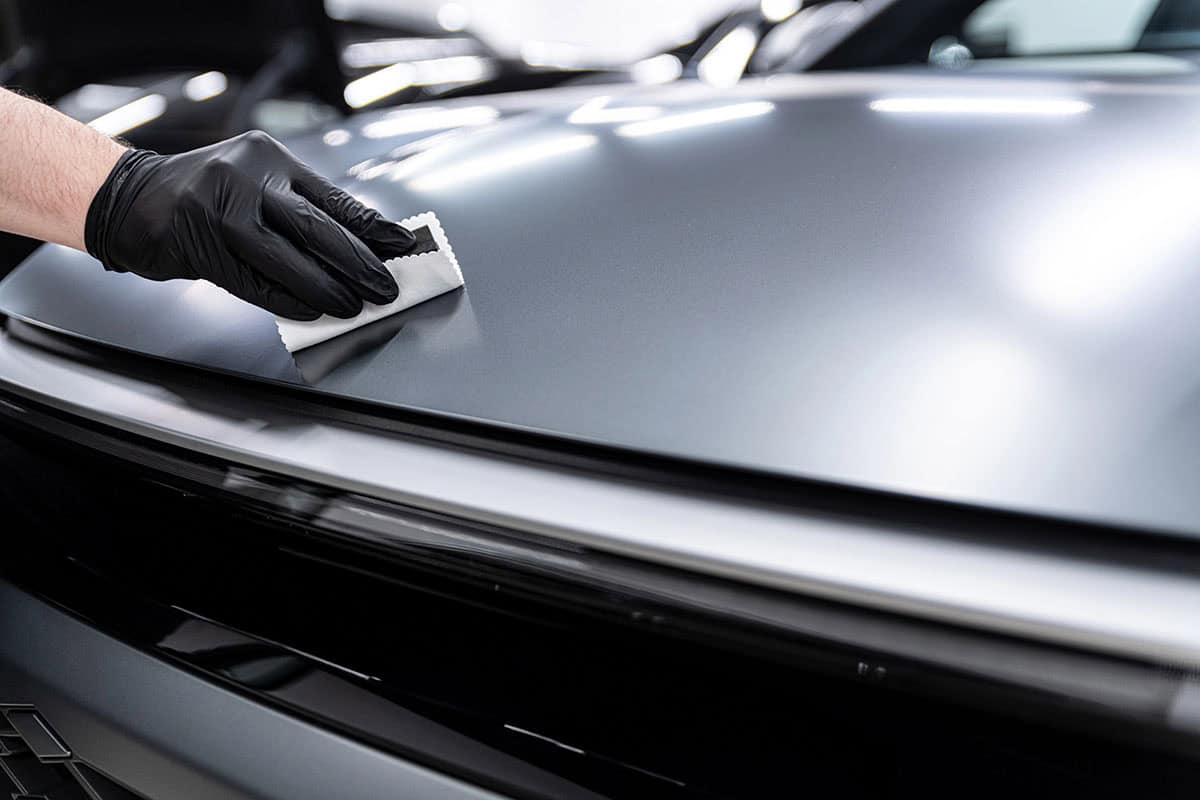
Matte Paint Nightmares: Why PDR is the Only Safe Option for Satin Finishes
Matte and satin paint finishes have a distinct appeal that gloss can’t replicate, the depth comes from texture, not shine. BMW calls theirs “Frozen,” Mercedes calls it “Magno,” and the aftermarket wraps that mimic the look have grown sharply in popularity for the same reason: the finish reads as deliberately different. But the same surface property that makes these finishes look the way they do is precisely what makes them fragile. A door ding that’s a minor inconvenience on a glossy car becomes a serious problem on a matte panel.
The reflex is to call a body shop. For a matte-finished car, that reflex will cost you. The properties that create the finish are also what make conventional repair techniques incompatible with it, you can’t sand, polish, or blend matte paint the way you can gloss. For dents without paint damage, Paintless Dent Repair (PDR) is the only repair method that doesn’t require touching the paint at all.
Why Matte Paint is Different
A standard glossy clear coat is optically smooth. It functions like a mirror, light hits the surface and bounces back at a predictable angle, producing the shine associated with most factory paint jobs.
Matte clear coat works differently. Manufacturers add texturizing agents that make the surface microscopically uneven. Rather than reflecting light in one direction, that rough surface scatters it across multiple angles simultaneously. That scattered light is what kills the reflection and produces the flat, non-glossy look.
That microscopic texture is both the defining feature of the finish and its core vulnerability. Polishing, buffing, or sanding will smooth it out, and once it’s smooth, it reflects light like the rest of the car doesn’t. The result is a permanent glossy patch where the flat finish used to be, and there’s no reversing it short of repainting the panel.
The Traditional Body Shop Trap
On a glossy car, a standard body shop approach to a door ding goes something like this: sand the area down, apply body filler, sand it smooth, prime it, then shoot paint over a small section and blend it into the surrounding panel.
On a matte panel, every one of those steps destroys the finish:
- Sanding? Destroys the texture.
- Polishing or buffing to blend? Creates a shiny spot.
- Spraying new matte clear coat and blending it in? Matte clear coat doesn’t blend, the chemistry doesn’t allow it.
The only option left for a traditional shop is to repaint the entire panel, edge to edge, and potentially blend into adjacent panels if the color match isn’t exact. A door ding that would run a few hundred dollars on a standard car turns into a multi-thousand-dollar repaint that replaces your original factory finish with something new.
The PDR Solution: Precision Without Contact
PDR works from behind the panel, no sanding, no primer, no clear coat. A technician uses specialized metal-tipped rods and a bright raking light to pinpoint the low point of the dent, then applies controlled pressure from behind in small increments, walking the metal back up to its original contour. On a matte-finished car, this approach matters for one specific reason: the surface is never touched.
For matte-finished cars specifically, the advantages stack up fast:
- No Paint Contact: The repair happens entirely from behind the panel. The matte finish, which can’t be buffed, blended, or color-matched if disturbed, stays intact throughout.
- Preserves Factory Finish: Factory paint is thicker and more chemically uniform than any respray. Keeping it original isn’t just aesthetically better; it directly affects resale value, since buyers and appraisers in the luxury segment verify paint condition as a matter of course.
- No Mismatched Sheen: Matte finishes are unforgiving of blending. Even “matte” touch-up paint reads differently under certain light angles. PDR removes that risk entirely because nothing gets painted.
- Time and Cost-Effective: A typical door ding takes two to four hours via PDR. A body shop respray on the same panel usually runs several days and can cost three to five times more, before factoring in the downtime.
Why Luxury Fleet Managers Choose PDR
Fleet operators running high-end rentals or executive vehicles face a straightforward math problem: a week of downtime for a minor repair costs more than the repair itself, and a visible sheen mismatch on a matte-finished car can cut auction value by more than the cost of a proper PDR repair. A respray where one panel reads glossier than the rest is often worse than the original dent at trade-in, buyers and dealers spot it immediately, and it triggers questions about the car’s history.
PDR turns most door dings into same-day repairs. Two to four hours is typical, and the car goes back into rotation the same day. Because the factory paint stays intact, the vehicle’s condition report reads “original paint”, which is a documented selling point in the luxury auction market, not just a talking point.
FAQs
Can PDR fix a dent if the matte paint is already scratched?
PDR restores the metal shape regardless of surface condition, so the dent comes out. The scratch is a separate issue, and matte paint has no clean fix for scratches, since buffing or touch-coating creates a visible sheen difference. In practice, a small scratch on flat, correctly-shaped metal is far less noticeable than a dent combined with a scratch. Whether to address the scratch separately depends on its depth and location.
Is PDR more expensive for matte-finished cars?
PDR pricing is driven by dent size, depth, and panel location, not paint type. That said, some technicians charge a small premium on matte finishes because the raking-light setup takes more time to calibrate, and any tool slip that burnishes the surface creates a problem polishing can’t fix. The size of that premium varies by shop; it’s worth asking upfront.
Why can’t I just use a DIY dent puller on my matte car?
Most DIY kits use glue tabs that grip the outside of the paint. On matte and satin finishes, the adhesive, or the solvent used to remove it, can alter the sheen, sometimes permanently. There’s also the over-pull problem: pull the metal too far and the fix becomes tapping it back down from the outside, which will leave shiny marks on a surface that can’t be polished back to match.
What if my car has a matte vinyl wrap?
PDR works well on wrapped vehicles. In most cases, the technician works right through the wrap without removing or replacing the vinyl, the dent gets fixed, the wrap stays intact, and you avoid the cost of sourcing and installing a replacement section for that panel.
How do I know if my dent is a candidate for PDR?
Two quick checks: is the paint cracked, and is the metal severely creased or stretched? If neither applies, the dent is almost certainly workable. A technician can confirm in a short consultation. For matte vehicles specifically, earlier is better, the longer a dent sits, the more the metal settles into that shape.
Can you really not buff or polish a matte finish at all?
Correct. Any abrasive contact, a fine polish, a clay bar, even rubbing too firmly with a microfiber, disrupts the microscopic surface texture that creates the flat look. The result is a semi-gloss patch that stands out against the surrounding matte. There’s no reversing that short of repainting.
What if the dent has a sharp crease or a paint chip?
PDR requires intact paint. If the dent cracked the clear coat or left a chip, PDR alone won’t complete the repair. A technician can still assess the full damage and walk you through what is and isn’t fixable without body work, sometimes a partial repair still makes sense.
Protecting Your Matte Finish
Matte finishes are expensive to fix the wrong way. A traditional body shop repair means sanding, priming, and repainting an entire panel, and matching a matte clear coat across a panel line is its own challenge before you even factor in cost. PDR avoids all of that by working from behind the metal. The finish never gets touched. For matte car owners, that’s not a minor convenience, it’s often the difference between a straightforward repair and a full-panel repaint bill.
Satin paint is unforgiving with conventional body repair, respray rarely matches, and the variance shows on a matte surface. PDR sidesteps that problem by working the metal back from behind without ever touching the finish. If your satin-painted vehicle has a dent, PDR is almost always the right call. Reach out to our team at Dingz Happen for an assessment.