
How Much Does Hail Damage Affect Your Car’s Value?
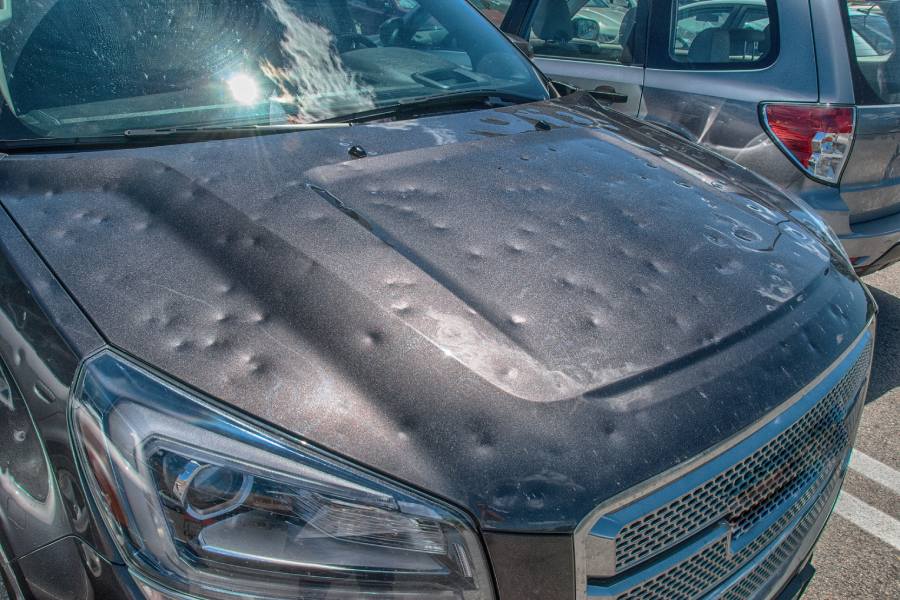
If you’ve ever walked outside after a Texas thunderstorm and found your car looking like a golf ball, you already know the sinking feeling. But beyond the cosmetic nightmare, there’s a real financial question most people don’t think about until it’s too late: how much value did your car just lose?
Hail damage car depreciation is a bigger deal than most drivers realize, especially here in Central Texas where severe storms roll through multiple times a year. Let’s break down exactly what hail does to your car’s resale value, what your insurance actually covers, and how paintless dent repair can help you recover most (or all) of that lost value.
How Hail Damage Tanks Your Car’s Resale Value
Here’s the blunt truth: unrepaired hail damage can knock 10% to 50% off your car’s market value, depending on how bad it is. That’s not a typo. A $30,000 vehicle with severe hail damage could lose $15,000 in value overnight.
The depreciation breaks down roughly by severity level:
- Minor damage (a handful of small dents, no paint damage): 10% to 15% value loss
- Moderate damage (dozens of dents across multiple panels, possible cracked windshield): 20% to 30% value loss
- Severe damage (heavy denting across the entire vehicle, broken glass, paint chipping): 40% to 50% or more value loss
These aren’t just made-up numbers. When buyers pull a vehicle history report and see hail damage claims, they immediately start discounting. Multiple hail claims on a single vehicle are even worse. If you’ve filed three or more hail claims in five years, some buyers won’t even consider the car.
Why the History Report Matters So Much
Every insurance claim you file for hail damage gets recorded. Potential buyers will see those claims when they run a Carfax or AutoCheck report. Even if you’ve had the car perfectly repaired, the claim history alone creates doubt. Buyers worry about hidden structural issues, recurring problems, and whether the car will hold up in the next storm.
That’s one reason why some car owners choose to pay for repairs out of pocket on minor damage rather than filing a claim. It keeps the vehicle history clean and protects long-term value.
Hail Damage Severity Levels: What Makes It Worse or Better
Not all hail damage hits the same way. Several factors determine how much your car’s value actually drops.
Factors That Increase Depreciation
Storm intensity and hail size. Quarter-sized hail might leave small dings. Baseball-sized hail can cave in roof panels and shatter every window on the car. Central Texas sees both, sometimes in the same storm. In 2023 alone, Texas ranked as the top state for hail damage claims, with insured losses running into the billions.
Multiple storm hits. A car that’s been through two or three hailstorms carries compounding damage. Each round of dents weakens the metal slightly and makes the vehicle harder to restore. Insurance adjusters take note of repeat claims, and so do buyers.
Delayed repairs. Leaving hail damage sitting for months (or years) can lead to secondary problems. Paint chips from hail impacts can let moisture in, leading to rust. That cosmetic issue just became a structural one, and now your repair costs jumped significantly.
Factors That Reduce Depreciation
Quick, quality repairs. Getting your car fixed promptly, especially through paintless dent repair, minimizes long-term value loss. A car that’s been properly restored can retain 90% to 95% of its pre-damage value.
Newer vehicles. A 2024 model with one minor hail repair holds its value far better than a 2016 model with the same history. Age and overall condition still matter most.
Comprehensive insurance coverage. If you carry comprehensive coverage (which is separate from collision), your insurer will typically cover hail repairs minus your deductible. Most deductibles run between $250 and $1,000. The key here is acting fast: file your claim, get estimates, and start repairs before the damage has time to worsen.
What Does Insurance Actually Pay for Hail Damage?
Let’s clear up some confusion about hail damage insurance payouts, because this trips up a lot of people.
Comprehensive insurance is what covers hail. Not collision. Not liability. If you only carry minimum coverage, you’re paying for hail repairs out of your own pocket. Period.
When you do have comprehensive coverage, here’s how the process typically works:
- Document everything. Take photos of all damage from multiple angles before you touch anything. Close-ups and wide shots both matter.
- File your claim promptly. Most insurers have time limits on when you can file after a weather event.
- Get an independent estimate. Don’t just rely on the insurance adjuster’s number. Get a quote from a reputable repair shop (especially one that specializes in hail repair) so you have a comparison.
- Understand your payout options. Your insurer will either pay the repair shop directly, reimburse you after repairs, or cut you a check if you choose not to repair. That last option is tempting but dangerous for your car’s value.
The “Pocket the Check” Trap
Here’s something we see constantly at our shop. A customer’s insurance company writes them a check for $3,000 to $5,000 in hail damage repairs. The customer pockets the money and drives around with a dented car. Seems like free money, right?
Wrong. That $4,000 check just cost you $8,000 or more in diminished resale value. You came out behind. Every time. If you’re planning to keep the car forever, maybe that math works for you. But if there’s any chance you’ll sell or trade in within the next few years, get the repairs done.
Diminished Value Claims
Even after repairs, your car may still be worth less than it was before the hail hit. This is called “diminished value,” and in Texas, you may be able to file a diminished value claim against the at-fault party’s insurance. With hail, though, there’s no at-fault party (it’s weather), so diminished value claims typically apply when another driver caused the damage. For hail specifically, your best protection against diminished value is getting high-quality repairs that leave no trace of the damage.
Does Hail Damage Affect Luxury Cars Differently?
Short answer: not really. The percentage of depreciation is roughly the same whether you’re driving a Honda Civic or a Mercedes S-Class. The dollar amounts are obviously higher on luxury vehicles because the base value is higher, but the proportional impact is similar.
That said, luxury car owners have one advantage. Brand-new and recently repaired luxury vehicles tend to hold their value better on the resale market because buyers expect those cars to have been well maintained. If you own a luxury vehicle and get hail damage repaired quickly with quality PDR work, the value recovery is usually excellent.
One thing to consider: some luxury vehicles use aluminum body panels, which require specialized PDR techniques. Make sure your repair shop has experience with your specific vehicle type.
The ROI of Paintless Dent Repair for Hail Damage
So what does hail damage repair actually cost, and is it worth it? Let’s look at the numbers.
Traditional body shop repairs for moderate hail damage typically run $3,000 to $8,000, sometimes more. They involve filling, sanding, repainting, and potentially replacing panels. The process takes a week or longer, and your car never quite has its original factory finish again.
Paintless dent repair costs significantly less, usually 40% to 60% of what a traditional body shop charges. For moderate hail damage, you’re looking at $1,500 to $4,000 in most cases. Minor damage can be as low as $500 to $1,000.
But here’s where the ROI really shows up. PDR preserves your car’s original factory paint. That matters for two big reasons:
- No repainting means no paint thickness inconsistencies that show up on inspection tools used by dealerships and savvy buyers.
- Original paint is a selling point. A car with all-original paint is worth more than one that’s been repainted, even if the repaint looks great.
We’ve seen customers invest $2,000 in PDR and preserve $8,000 to $10,000 in vehicle value. That’s a 4x to 5x return on investment. Hard to find a better deal than that.
Why PDR Works So Well for Hail Damage
Paintless dent repair was practically invented for hail damage. The technique uses specialized metal rods and tools to gently push dents out from behind the panel, restoring the metal to its original shape without disturbing the paint. It’s faster (often same-day for minor damage), cheaper, and produces better results than traditional repair methods.
The one catch: PDR works best when the paint hasn’t been cracked or chipped. If the hail was severe enough to break through the clear coat, some panels may need traditional repair. A good PDR technician will be upfront about what can and can’t be fixed with the paintless method.
Is It Worth Buying a Hail-Damaged Car?
If you’re on the other side of this equation and looking at buying a hail-damaged vehicle, there are some real deals to be had. But go in with your eyes open.
What to Check Before Buying
Get a PDR estimate first. Before you commit to anything, find out what it’ll actually cost to fix the hail damage. Get a written quote from a paintless dent repair specialist, not just a guess from the seller.
Look beyond the hail damage. Underneath all those dents, the car might have other problems. Check the engine, transmission, tires, and undercarriage. Hail damage can mask issues that are far more expensive to fix.
Do the math. If a car is discounted $5,000 because of hail damage and repairs will cost $2,000, you’re coming out $3,000 ahead. That’s a good deal. But if the discount is $3,000 and repairs cost $4,000, walk away.
Check the claim history. A car with one hail claim is different from a car with four. Multiple claims suggest the vehicle has been through repeated punishment, and that adds up.
Protecting Your Car from Hail in Central Texas
Central Texas sits right in the heart of Hail Alley. The region sees an average of 5 to 10 significant hail events per year, with peak season running from March through June. That’s not a matter of if your car will get hit, it’s when.
A few practical steps:
- Park in a garage whenever possible. It’s the single best protection.
- Use a padded car cover if you don’t have garage access. Hail-specific covers with foam padding do work.
- Watch weather alerts and move your car to covered parking when storms are incoming.
- Carry comprehensive insurance. If you live in Central Texas and don’t have comprehensive coverage on your vehicle, you’re gambling. The average comprehensive deductible pays for itself the first time a storm hits.
Get Your Car’s Value Back with Dingz Happen
If hail has already found your car, don’t let the damage sit and eat away at your vehicle’s value. The longer you wait, the more it costs you, both in repair expenses and lost resale value.
At Dingz Happen, we specialize in paintless dent repair for hail damage across Austin, Cedar Park, and all of Central Texas. We’ve restored thousands of hail-damaged vehicles to their original condition, and we can often come to you and fix the dents on the spot. No long wait times. No repainting. Just your car looking like the storm never happened.
Contact Dingz Happen today for a free hail damage estimate and find out how much value we can restore to your vehicle.