
Is Buying a Hail Damaged Car in Austin a Good Idea?
Every spring in Central Texas, hail season rolls through like clockwork. Storms pummel the Austin and Cedar Park area from March through May, and sometimes earlier. That means a flood of hail damaged vehicles hits the market every year, many of them at steep discounts. If you’ve been browsing used car listings and spotted one with a suspiciously low price tag, there’s a good chance hail damage is the reason.
So is buying a hail damaged car actually worth it? The honest answer: it depends. Some of these deals are genuinely fantastic. Others will drain your wallet faster than you can say “salvage title.” Let’s break down what you need to know before you pull the trigger.
Who Should Consider a Hail Damage Car Deal?
Not every buyer is a good fit for a hail damaged vehicle. But for certain people, it makes a lot of sense.
First-time buyers and parents shopping for a teen’s first car often find quality-brand vehicles at prices that would otherwise be out of reach. If the car just needs to get from point A to point B reliably, some cosmetic dents aren’t a dealbreaker.
Budget-conscious buyers can stretch their money significantly. We’ve seen customers pick up vehicles at 20% to 50% below market value simply because of cosmetic hail dents. When the mechanical systems are solid and the damage is limited to the body panels, that’s a real bargain.
Buyers who don’t care about looks (and there are more of you out there than you’d think) can skip the repair step entirely and just drive the car. No shame in that.
The key question isn’t whether the car has hail damage. It’s how much damage, what kind, and what it’ll cost to fix.
Understanding the Types of Hail Damage
Hail damage isn’t one-size-fits-all. The severity ranges from barely noticeable to absolute wreckage, and that difference matters more than anything when you’re evaluating a purchase.
Minor Damage (Cosmetic Dents, Paint Intact)
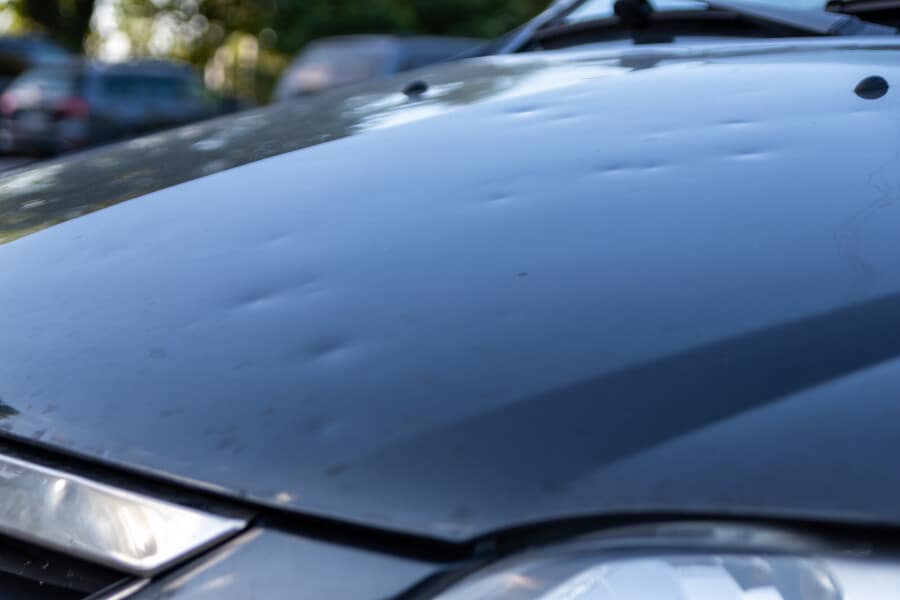
This is the sweet spot for buyers. Small dents across the hood, roof, and trunk with no cracked paint. These are perfect candidates for paintless dent repair (PDR), which means a skilled tech pushes the dents out from behind the panel without touching the factory paint. PDR hail repair cost typically runs between $1,500 and $3,500 for a full vehicle, depending on the number and size of dents. Compare that to a $5,000 to $15,000 discount on the purchase price and you can see why this is attractive.
Moderate Damage (Dents Plus Paint Cracks or Chips)
When hail cracks or chips the paint, you’re looking at a combination of PDR and body work. The dents can still be pulled, but damaged paint areas need sanding, priming, and repainting. This adds cost and complexity. You might be looking at $3,000 to $6,000 in repairs, sometimes more for larger vehicles.
Severe Damage (Structural, Glass, or Mechanical Issues)
Large hail can shatter windshields, crack sunroof glass, damage sensors and antennas, and in extreme cases compromise the structural integrity of roof panels. When an insurance company declares a total loss on a hail damaged vehicle, it’s usually because the repair estimate exceeds a certain percentage of the car’s value. These vehicles often end up with a salvage title. That doesn’t mean they’re undriveable, but it does mean you need to be extra careful.
The Salvage Title Question
Let’s talk about salvage title hail damage, because this is where a lot of buyers get tripped up.
When an insurance company totals a car due to hail, the vehicle receives a salvage title. In Texas, that means it was deemed uneconomical to repair relative to its value. After repairs, it can be inspected and re-titled as “rebuilt,” but that designation follows the car forever.
Here’s what that means in practical terms:
- Resale value takes a permanent hit. Even after perfect repairs, a rebuilt title can reduce the car’s value by 20% to 40%. That’s your diminished value from hail damage, and it doesn’t go away.
- Financing gets harder. Many banks and credit unions won’t finance salvage or rebuilt title vehicles. You may need to pay cash or find a specialty lender.
- Insurance options shrink. Some insurers won’t write comprehensive coverage on rebuilt titles. Others will, but they may cap the payout at a lower amount. Always call your insurance company before buying to confirm coverage.
If you’re buying a salvage title vehicle to drive it for years and don’t care about resale, the math can still work. But if you’re planning to flip it or trade it in within a couple of years, think twice.
Your Hail Damage Inspection Checklist
Whether you’re buying from a dealer, an auction, or a private seller, you need to inspect the vehicle thoroughly. Here’s what we tell our customers at Dingz Happen to look for:
Exterior Check
- Walk around the car in direct sunlight or under bright lights. Hail dents are hard to spot in shade or overcast conditions. Look at the hood, roof, trunk lid, and tops of the fenders from a low angle.
- Count the dents and note their size. Dime-sized dents are usually straightforward PDR work. Quarter-sized or larger gets more complex. Golf ball-sized dents on a roof could mean the panel needs replacement.
- Check every glass surface. Windshield, rear window, sunroof, and side mirrors. Cracked glass is a separate repair cost.
- Look for paint damage. Run your fingers over the dents. If you can feel rough edges or see bare metal, the paint is compromised and simple PDR won’t be enough.
Underhood and Interior
- Pop the hood and check for dents on the underside. This tells you how hard the hail hit. If the inner structure of the hood is dented, you’re dealing with serious impact.
- Check for water intrusion. Hail can crack seals around windshields and sunroofs. Smell the interior for mildew. Pull back floor mats and check for staining or dampness. Water damage causes electrical problems that are expensive to diagnose and fix.
- Test all electronics. Sensors, cameras, parking assist, infotainment. Large hail can damage roof-mounted antennas, GPS modules, and satellite radio receivers.
Documentation
- Pull a CARFAX or AutoCheck report. A CARFAX hail damage report will show if the vehicle has prior hail claims, which tells you whether this is a repeat victim. Cars that have been through multiple hail events may have compromised panels even if each individual repair looked fine.
- Check the used car hail history. Has it been repaired before? By whom? PDR repairs done right are invisible, but cheap body shop work (especially Bondo and respray) will cause problems later.
- Get the vehicle inspection form from the seller. In Texas, dealers should provide documentation about known damage and repairs. Read it carefully. If a dealer won’t provide this, walk away.
Insurance Considerations Before You Buy
This is a step a lot of people skip, and it bites them later.
Before you buy a hail damaged car, call your insurance company. Tell them exactly what you’re looking at. Ask these specific questions:
- Will you provide comprehensive coverage on a vehicle with prior hail damage or a rebuilt title?
- If the car gets hit by hail again after I buy it, will the claim be covered? Or will pre-existing damage be excluded?
- What’s the maximum payout on a rebuilt title vehicle?
Some insurers will cover it without issue. Others won’t touch it. Better to find out before you hand over cash than after the next Cedar Park hail season rolls through and you’re stuck with no coverage.
Also consider this: if the car you’re buying still has unrepaired hail damage, you can sometimes purchase the vehicle, get your own comprehensive policy, and then file a claim if new damage occurs. But insurers are smart about pre-existing conditions, so don’t assume you can game the system.
Getting the Price Right
Here’s where having a PDR expert in your corner really helps. As paintless dent repair specialists who’ve worked on thousands of hail damaged cars in the Austin and Cedar Park area, we can give you a realistic repair estimate before you buy. That number is critical for negotiating.
The formula is simple:
Fair purchase price = Market value of the car undamaged, minus repair costs, minus diminished value from the damage history.
If a car is worth $20,000 clean, needs $2,500 in PDR work, and will carry a diminished value of roughly $3,000 to $5,000 due to the hail claim on its history, you shouldn’t be paying more than $12,500 to $14,500. If the seller is asking $17,000, that’s not a deal. That’s a trap.
Don’t let excitement over a “bargain” cloud your judgment. Run the numbers. Every time.
When It’s a Great Buy
Buying a hail damaged car works out well when:
- The damage is cosmetic only (dents with intact paint)
- PDR can handle the repairs at a reasonable cost
- The mechanical and electrical systems are fully functional
- You have insurance lined up that covers the vehicle
- The purchase price reflects the true cost of repairs plus diminished value
- You plan to keep the car long-term
We’ve seen customers save $8,000 or more on reliable, late-model vehicles simply because they were willing to buy a car with some dents and get them fixed. That’s real money.
When You Should Walk Away
Skip it if:
- The car has a salvage title and you need financing
- There’s evidence of water damage in the cabin
- Multiple panels need full replacement (not just dent removal)
- The seller won’t let you get an independent inspection
- The discount doesn’t account for repair costs and diminished value
- The car has been through multiple hail events with questionable repair history
Let Dingz Happen Help You Decide
If you’re thinking about buying a hail damaged car in the Austin or Cedar Park area, don’t guess at the repair costs. Bring it to us first, or give us a call. We’ll give you an honest assessment of the damage, a realistic repair estimate, and straight talk about whether the deal makes sense. We’ve been doing paintless dent repair in Central Texas long enough to know the difference between a steal and a money pit.
And if you already own a hail damaged vehicle and want it looking new again, we handle that too. Contact Dingz Happen today and let’s talk about your options.