
Seven Common Misconceptions About Dent Repair (And What Actually Happens)
If you’ve got a dent on your car, you’ve probably already Googled “paintless dent repair” and run into some conflicting information. Some of it’s outdated. Some of it’s just wrong. And some of it keeps people from choosing a repair method that would’ve saved them hundreds of dollars.
I’ve been doing PDR work in the Austin and Cedar Park area for years, and I hear the same myths over and over from customers walking through the door. Let’s set the record straight on the biggest paintless dent repair misconceptions so you can make an informed decision about your vehicle.
Myth 1: PDR Only Works on Small Dents
This is probably the most common one. People see a baseball-sized dent on their door panel and assume PDR is off the table. They think it’s only good for parking lot dings and shopping cart dents.
That’s not how it works.
Modern PDR techniques can handle dents that are surprisingly large. We’re talking fist-sized hail damage, creased panels, and dents that span several inches across. The key factors aren’t really about size. They’re about whether the paint is intact and whether a technician can get access behind the panel.
How Large Dent Repair Actually Works
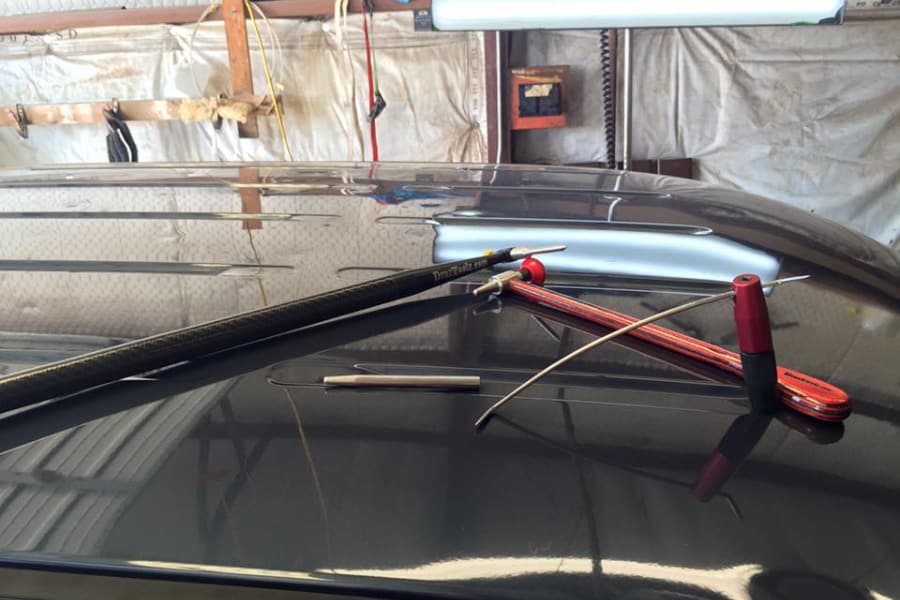
For bigger dents, a technician works from the backside of the panel using specialized metal rods and body picks. The process involves carefully massaging the metal back to its original shape, working from the outer edges of the dent inward. It’s slow, precise work. On a large dent, it might take an hour or more of gradual manipulation. But the result is a panel that looks factory-original because the original paint and finish never got touched.
The real limitations of PDR come down to paint condition and access, not dent size. If the paint is cracked or flaking at the dent site, or if the panel is in a spot where tools can’t reach behind it, then traditional body work might be necessary. But “it’s too big” is rarely the actual reason PDR won’t work.
Myth 2: PDR Damages Your Paint
This one drives me a little crazy because PDR is specifically designed to preserve your paint. That’s the whole point.
The process uses no fillers, no sanding, no repainting. A technician pushes the dent out from behind using hand tools. Your factory paint finish stays completely intact. In fact, keeping the original paint is one of the biggest advantages of PDR over traditional body shop methods, because a factory finish holds up better and maintains your vehicle’s resale value.
What About Paint Transfer and Protection?
Some customers worry about the tools scraping or chipping paint during the repair. Experienced technicians take precautions to prevent this. One common method involves using aluminum tape over the work area. This tape has no filler and leaves zero residue. It acts as a protective barrier so the technician can work without any risk of paint transfer or surface damage.
Before starting any repair, a good tech will inspect the dent location, check the paint condition, and assess the depth. If there’s any risk to the paint, you’ll know about it before work begins. But in the vast majority of cases, PDR leaves the paint in the exact same condition it was in before the dent happened.
If you’re wondering about paint correction after PDR, it’s almost never needed. The repair doesn’t disturb the clear coat or the paint layers underneath. What you might need is a quick detail or polish if the dent area was dirty, but that’s cosmetic cleanup, not damage repair.
Myth 3: PDR Takes Forever
People hear “hand tools” and “careful manipulation” and picture a week-long process. The reality? Most PDR jobs are done in a few hours. Many single-dent repairs take less than an hour.
Compare that to traditional body work. A conventional repair means removing the panel or prepping it, applying filler, sanding, priming, painting, clear coating, and then waiting for everything to cure. That process can easily take several days. You’re leaving your car at a body shop, arranging a rental, and disrupting your whole week.
PDR skips all of that. There’s no paint to dry, no filler to cure, no color matching to stress about. A tech pushes the dent out, checks the surface, and you drive away. For people with busy schedules in Austin or Cedar Park, the time savings alone make PDR worth considering.
Even for more extensive damage like hail storms (which we see plenty of in Central Texas), a full PDR hail repair takes a fraction of the time a body shop would need.
Myth 4: PDR is Too Expensive
This myth usually comes from people who haven’t actually gotten a quote. They assume that because PDR is a specialized skill, it must cost a premium.
Here’s the truth about PDR costs: paintless dent repair is almost always cheaper than traditional dent repair. Usually by a significant margin.
Why PDR Costs Less
Traditional body work involves materials like filler, primer, paint, and clear coat. It involves labor-intensive steps like sanding and color matching. All of that adds up fast. A traditional body shop repair for a single dent can run $500 to $1,500 depending on location and severity.
PDR eliminates the material costs entirely. There’s no paint to buy, no filler to apply. The labor time is shorter because the process itself is more efficient. A comparable PDR repair might run $150 to $500. For minor dents and dings, you might be looking at under $100.
PDR also helps preserve your vehicle’s value in a way traditional repair doesn’t. A car with its original factory paint is worth more than one that’s been repainted, even if the repaint looks good. Insurance companies and used car buyers both recognize this, which is why many insurance providers actually prefer PDR claims over traditional body work.
Myth 5: PDR Doesn’t Work on Newer Cars
Some people think that modern vehicles use materials that are too advanced or too fragile for PDR. This was never really true, and it’s definitely not true now.
Today’s PDR technicians are trained to work with aluminum panels, high-strength steel, and the various composite materials found in modern vehicles. The tools and techniques have evolved right alongside automotive manufacturing. In some ways, PDR works even better on newer cars because modern paint formulations tend to be more flexible and less prone to cracking during the repair process.
Whether you’re driving a 2024 truck with aluminum body panels or a late-model sedan with high-strength steel, PDR techniques are adapted to handle those materials without compromising structural integrity or finish.
Myth 6: Anyone Can Do PDR with the Right Tools
You can buy a PDR kit on Amazon for fifty bucks. That doesn’t mean you should use it.
This is a myth the merge of YouTube tutorials and cheap tool kits has made worse. People figure, “It’s just pushing a dent out, how hard can it be?” Very hard, actually.
Why DIY PDR is a Bad Idea
Professional PDR requires understanding metal memory, knowing how much pressure to apply (and where), and having the experience to read how a panel responds to manipulation. Apply too much force in the wrong spot and you can create new high spots, stretch the metal permanently, or crack the paint. Now instead of a $200 PDR fix, you’re looking at a $1,000 body shop bill.
The directional aspect alone is something most people don’t understand. Dent repair isn’t just pushing metal in the opposite direction. It involves reducing pressure across specific areas to coax the metal back to its original shape. That’s a skill that takes years of hands-on training to develop. There’s a reason PDR technicians apprentice and practice on junk panels before they ever touch a customer’s car.
If you’re thinking about DIY dent repair, don’t. The risk of making things worse is too high, and you’ll end up spending more to fix the damage you caused on top of the original dent.
Myth 7: Some Dents Just Can’t Be Fixed
There’s a defeatist version of this myth where people assume their dent is beyond help and go straight to living with it. Or worse, they assume the only option is an expensive full panel replacement.
PDR can handle way more than most people realize. Hail damage, door dings, creased dents, dents on body lines, dents on fenders and quarter panels. Even vehicles that have been through serious hail storms with dozens of dents across every panel can be restored through PDR. It’s one of the best methods for getting a car back to pre-damage condition without the cost and hassle of a full repaint.
Are there dents that PDR truly can’t fix? Sure. If the metal is torn, if the paint is severely cracked, or if the dent is in a location with zero tool access, then traditional methods are the way to go. But those situations are less common than people think. Before you write off your dent as unfixable, get it looked at by a qualified PDR technician. You might be surprised at what’s possible.
The Bottom Line
Most of the myths around paintless dent repair come from outdated information or bad experiences with unqualified techs. Modern PDR, performed by trained professionals with the right tools, can handle a wide range of dent types on virtually any vehicle. It’s faster, cheaper, and better for your car’s long-term value than traditional body work.
At Dingz Happen, we handle everything from minor door dings to full hail damage repair across Austin, Cedar Park, Georgetown, and the surrounding areas. We’ve seen every type of dent and we’ll give you an honest assessment of whether PDR is the right solution for your vehicle.
Don’t let misconceptions keep you driving around with dents you don’t need to live with. Get a free estimate and see what PDR can actually do.